Short answer: Not until you've measured it. The Minnesota DNR's guideline is at least 4 inches of new, clear ice to walk on, 5 to 7 inches for a snowmobile or small ATV, and 9 to 10 inches for a small car or SUV. Double those numbers for white or snowy ice. And the DNR doesn't measure ice on any lake, so checking is on you.
Living on the lake, you watch it freeze from the kitchen window. That's exactly when people get impatient. Here's what the DNR actually says.
The DNR's numbers (new, clear ice)
Ice thickness | What it's for |
|---|---|
Under 4" | Stay off |
4" | Walking, ice fishing |
5" to 7" | Snowmobile or small ATV |
7" to 8" | Side-by-side ATV |
9" to 10" | Small car or SUV |
11" to 12" | Medium SUV or small truck |
13" | Medium truck |
16" to 17" | Heavy-duty truck |
20"+ | Heavy-duty truck with a wheelhouse |
White ice, the cloudy kind that forms when snow melts and refreezes, is only about half as strong. Double everything above.
Why your neighbor's ice isn't your ice
The DNR says ice can be two feet thick in one spot and an inch thick a few yards away. Snow, currents, springs, narrow spots, and inlets all change it. Snow is the sneaky one: it insulates the ice and slows it from thickening, and it hides weak spots.
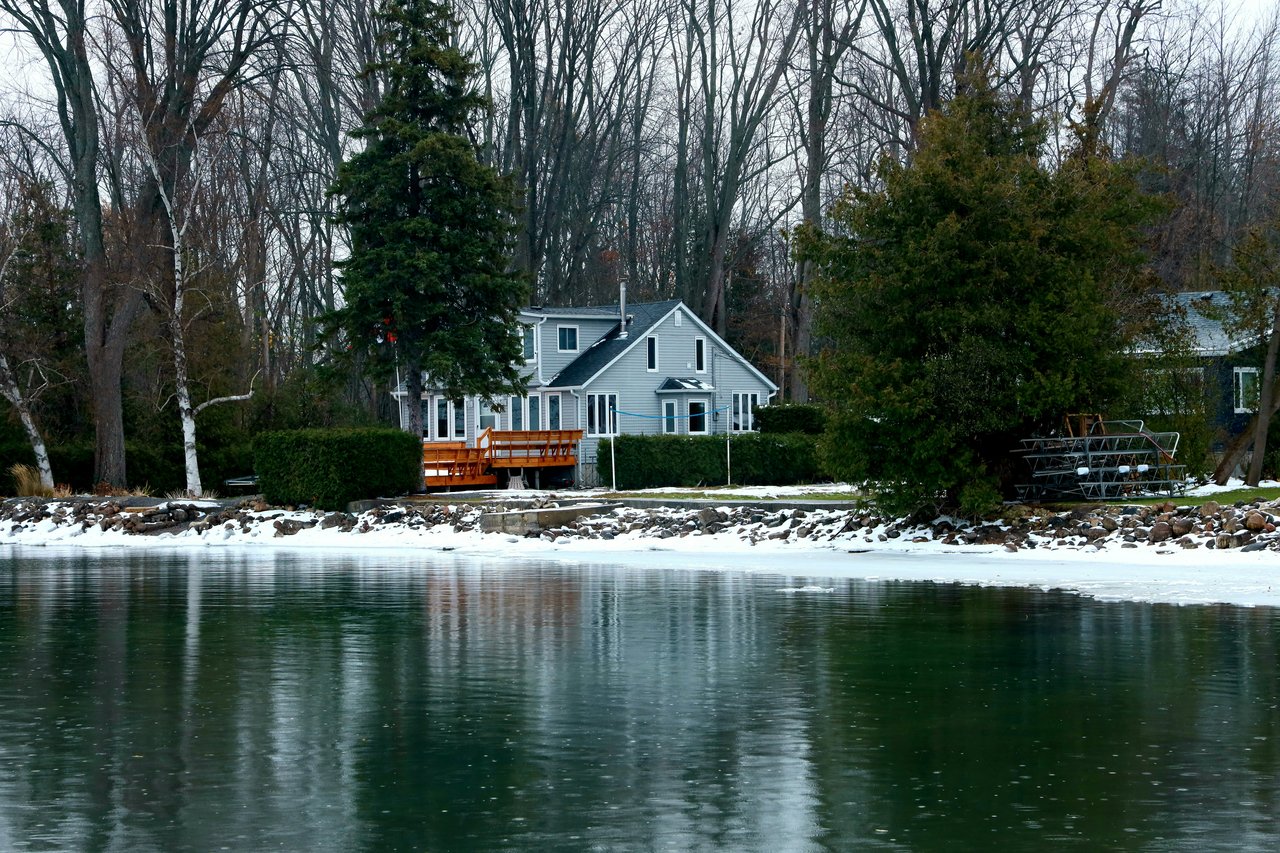
Ice also forms at the shoreline first and works its way out. So the ice off your dock can look solid while the middle of the bay is still thin.
How to check it
- Use an auger or spud bar and a tape measure. Don't guess from how easily the chisel goes in.
- Measure only the clear ice, not slush or snow on top.
- Check every 150 feet or so as you go out.
- Carry ice picks and a rope, and wear a flotation jacket or a foam life jacket.
Parking on the ice
The DNR's rule of thumb: cars and trucks parked on the ice should be at least 50 feet apart and moved every two hours. Anything parked longer needs thicker ice than the standard chart.
A local one
On White Bear Lake, the conservation district has an official ice-out declarer who calls it every spring. Even the people who know the lake best treat the ice with respect.
Quick FAQ
How thick does ice need to be to walk on? At least 4 inches of new, clear ice, per the DNR.
Does the DNR check ice on my lake? No. The DNR doesn't measure ice thickness on Minnesota lakes.
Is snow-covered ice safer? No. Snow slows ice growth and hides weak spots. Double the guidelines for white or snow-covered ice.
Thinking about buying a lake home and wondering what winter on that lake is like? Send me the lake and I'll tell you what I know.
Tim Ornell | Realtor, Real Broker Luxury Division (NASDAQ: REAX) | 651.263.9480 | ornellgroup.com
Sources: MN DNR: General ice thickness guidelines · MN DNR news release, Dec 19, 2024 · CBS Minnesota: Check ice thickness often · Press Publications: White Bear Lake level and ice-out