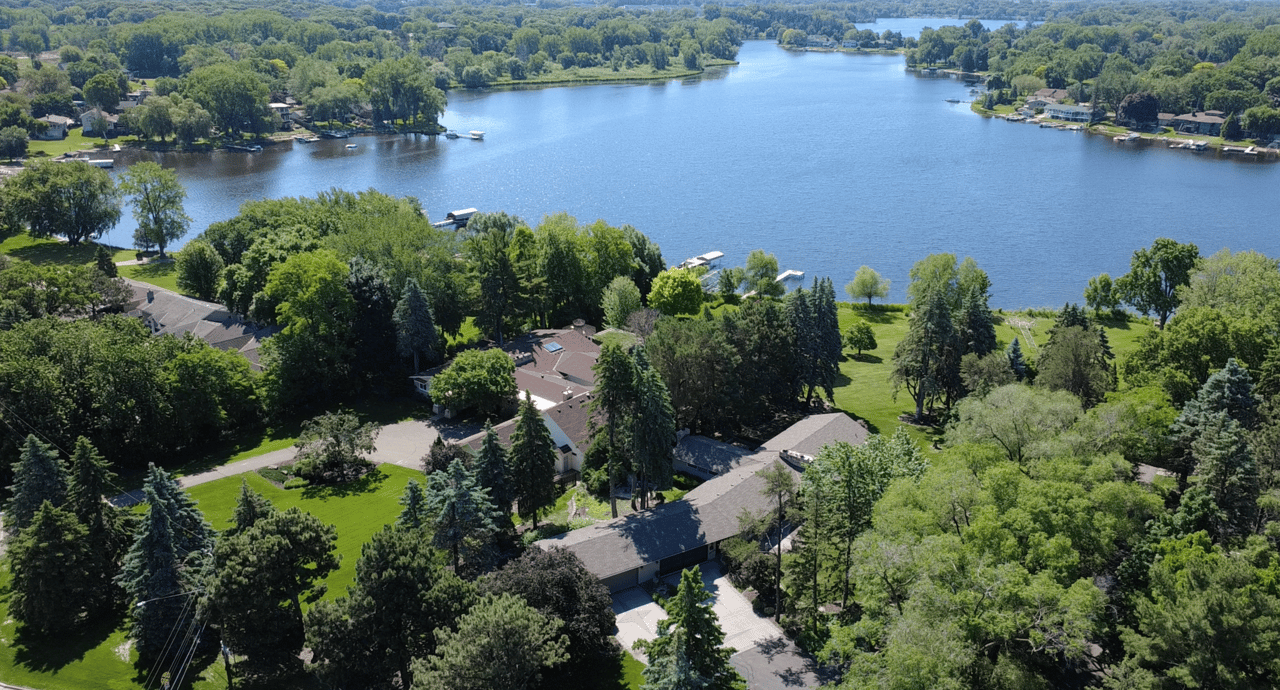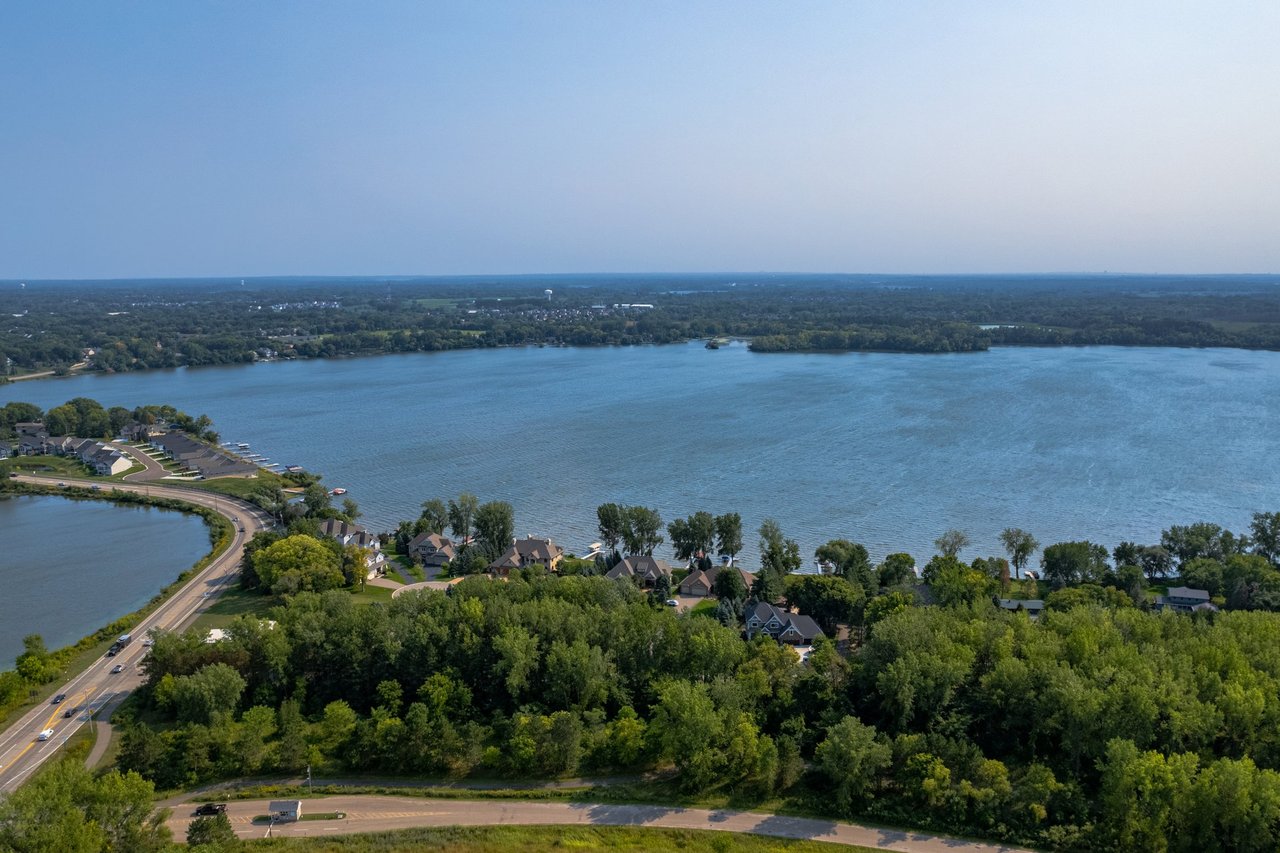
If you've looked at a house on Centerville Lake in the last ten years, somebody warned you about the algae. A neighbor, an agent, your brother-in-law who fished it once in August. It was a fair warning. It's also out of date.
The lake sat on Minnesota's impaired waters list for excess nutrients. Summer phosphorus and chlorophyll-a ran at roughly double the state standard. Facilities at the Rice Creek Chain of Lakes Park Reserve got closed some summers over blue-green algae. That was real, and it went on for years.
It's been treated. I live on this lake, and I'm writing this in mid-September, which means the 2026 season is effectively a closed book. It was the first full summer after the project finished, and we went the whole thing without a single significant algae day. Not one of those late-August stretches where you keep the kids out of the water and stop inviting people over. The bloom window came and went.
RCWD won't publish the 2026 monitoring numbers for a while yet, so right now the only read available on that first post-completion summer is what the people who live here watched happen. Here's the rest of the story, because if you own here or you're buying here, you should be able to answer this question with a date instead of a shrug.
The problem wasn't what most people assumed
Most people assume lake algae comes from runoff. Fertilizer off the lawns, salt off the roads, everything the watershed dumps in.
For Centerville, that turned out to be the smaller half of it. The Rice Creek Watershed District and its partners spent more than a decade on the runoff side. Rain gardens. Stormwater ponds. Street sweeping. A significant stormwater reuse project at the Laurie LaMotte ballfields. Real money, real work, and the lake still turned green.
So they studied it, for several years, and found the actual driver: internal phosphorus loading. The phosphorus was already in the lake bottom, and the sediment was recycling it back into the water every summer to feed the next bloom. You can clean up every driveway in the watershed and it doesn't touch that.
The fix
Aluminum sulfate. Alum, if you've heard anyone on the lake say it.
Alum binds to phosphorus and locks it into the sediment where algae can't get at it. It's been used on lakes in the U.S. and Europe for decades. Low environmental impact, no swimming or fishing restrictions during or after.
This is not an experiment on Centerville. It's the third lake in the northern suburbs to get the same playbook.
Bald Eagle did this first, and we have ten years of results
Bald Eagle Lake got two alum doses, spring 2014 and spring 2016, run by Rice Creek Watershed District with the same contractor that later did Centerville. About 248,000 gallons each time.
The results are the reason anyone in the north metro takes alum seriously:
- Phosphorus down 67 percent
- Algae growth down 69 percent
- Water clarity up 63 percent
Put that in terms you'd notice from a dock. From 2001 to 2008, summer clarity on Bald Eagle was about five feet and often worse by late August. The 30-year summer average was 3.9 feet. After the first dose it hit 11 feet at the maximum. After the second, 16 feet. The post-treatment average has been running around 8 feet.
In 2017 Bald Eagle met state standards for nutrients, algae, and clarity. RCWD got national recognition from the North American Lake Management Society for it. That's a decade of holding.
Forest Lake ran the same play through the Comfort Lake-Forest Lake Watershed District. Phase one went in during fall 2023. Phase two started September 30, 2025, focused on the second basin in water deeper than 15 feet. Forest is the largest lake in Washington County and wasn't listed as impaired, but summer phosphorus readings were creeping over the state standard, so they treated it before it got listed rather than after. Their internal goal is 30 micrograms per liter, tighter than the state's 40.
So the pattern across the northern suburbs is Bald Eagle in 2014 and 2016, Forest in 2023 and 2025, and Centerville in 2024 and 2026. Three of the biggest recreational lakes up here, same diagnosis, same fix, all of it inside the last twelve years.
The Centerville timeline
It went in two phases:
- May 2024: The contractor, SOLitude Lake Management, applied close to 200,000 gallons over about ten days. Roughly 26,000 gallons a day.
- Spring 2026: Phase two. Applied starting in late April, finished before the May 9 fishing opener.
- June 30, 2026: Project complete, on schedule and under budget.
Total cost was about $1,057,000. More than 85% of it came from a Minnesota Clean Water Fund grant of $954,500, with the Rice Creek Watershed District, the City of Centerville, the City of Lino Lakes, Anoka County, Anoka County Parks and Rec, and the Centerville Lake Association covering the rest.
What the numbers look like now
After phase one alone, 2024 phosphorus levels on Centerville Lake were the lowest on record going back to 1980. RCWD's own monitoring during that stretch showed a major improvement in clarity with very few and only light blooms.
The project is designed to control 178 pounds of phosphorus a year initially and 2,637 pounds over its life. RCWD expects the improvement to hold for 15 to 20 years. The stated goal is getting Centerville Lake off the impaired waters list entirely by meeting state nutrient standards.
They're still monitoring. Bi-weekly water quality sampling continues through the summer, plus annual aquatic plant surveys.
What this means if you own or you're buying here
Two things, and they pull in different directions.
If you own here: the algae objection is answerable now. For years the honest response to "what about the algae" was that the watershed was working on it. Now it's a completed public project with a cost, a completion date, and ten years of monitoring data behind it. That's a different conversation with a buyer than a shrug and a hope.
If you're buying here: understand the clock. Fifteen to twenty years is a long runway, not a permanent fix. The sediment phosphorus is locked, not gone, and the watershed side still depends on everyone upstream continuing to keep phosphorus out. Matt Kocian at RCWD has been direct about that part publicly, and he's right.
Where this puts Centerville in the market
Centerville, Peltier, and Reshanau are one connected chain, and for a long time buyers shopped them as one thing. They are not one thing anymore.
Centerville already had the best clarity in the chain before any of this, generally in the two to three meter range. Peltier is shallower with a bigger watershed and has run higher on nutrients. Reshanau is the quiet, private one. Three different products on the same water system.
My read, from writing offers on all three: Centerville has separated. It's no longer priced like the middle lake in a small chain. It's tracking toward the tier that Bald Eagle, Forest, and Owasso sit in, full recreational lakes with real clarity and a track record behind the water quality. That's a different buyer and a different number.
The clarity wasn't created by the alum project. What the project did was remove the one asterisk that kept showing up in every conversation about this lake, and it did it with a documented public record instead of a promise.
The part I keep coming back to is how unglamorous the work was. Street sweeping. Rain gardens. Ten years of sampling before anyone put a boat on the water with alum in it. Nobody gets a ribbon cutting for street sweeping. It's also the reason the lake in front of my house looks the way it does this fall, and that's usually how it goes.
Quick answers
Is Centerville Lake safe to swim in? Alum has a very low environmental impact and RCWD placed no swimming or fishing restrictions during or after application. Blue-green algae blooms have dropped sharply since the 2024 application.
When was the Centerville Lake alum treatment done? Phase one in May 2024, phase two in spring 2026. The project was declared complete on June 30, 2026.
How long does an alum treatment last? RCWD expects 15 to 20 years of improved water quality on Centerville Lake.
What did it cost and who paid? About $1,057,000. More than 85% came from a Minnesota Clean Water Fund grant of $954,500, with the balance from RCWD, Centerville, Lino Lakes, and Anoka County.
Has alum worked on other Twin Cities lakes? Yes. Bald Eagle Lake was treated in 2014 and 2016 and saw phosphorus drop 67 percent, algae drop 69 percent, and clarity improve 63 percent. It met state standards in 2017. Forest Lake was treated in fall 2023 and again in September 2025.
Is Centerville Lake still on the impaired waters list? It was listed as impaired for excess nutrients. Getting it delisted is the stated goal of the project, and that determination comes from the MPCA based on continued monitoring.
If you own on Centerville, Peltier, or Reshanau and you want to know how the water quality record actually reads on your specific stretch, send me the address and I'll pull what RCWD has published for it.
Tim Ornell | Waterfront Advisors, Real Broker Luxury Division (NASDAQ: REAX) | 651.263.9480 | timornell.com | Lakeshore specialists across the Twin Cities.
Sources: Rice Creek Watershed District Centerville Lake and Bald Eagle Lake project pages, RCWD Summer 2025 update, Comfort Lake-Forest Lake Watershed District Forest Lake alum project page, Minnesota's Legacy (Clean Water Fund) project record, Press Publications coverage of the August 2025 Centerville City Council update.