Most of the time, the answer is no.
I get this question every spring, right when docks start going back in around White Bear Lake, Centerville, Bald Eagle, and Turtle Lake. People assume there's a Minnesota DNR application waiting for them before they can put a dock in the water. For most homeowners, there isn't, and knowing exactly where the line falls can save you a phone call and a headache.
Here's how it actually works, broken into the three tiers the state uses.
Tier one: most docks are automatically exempt
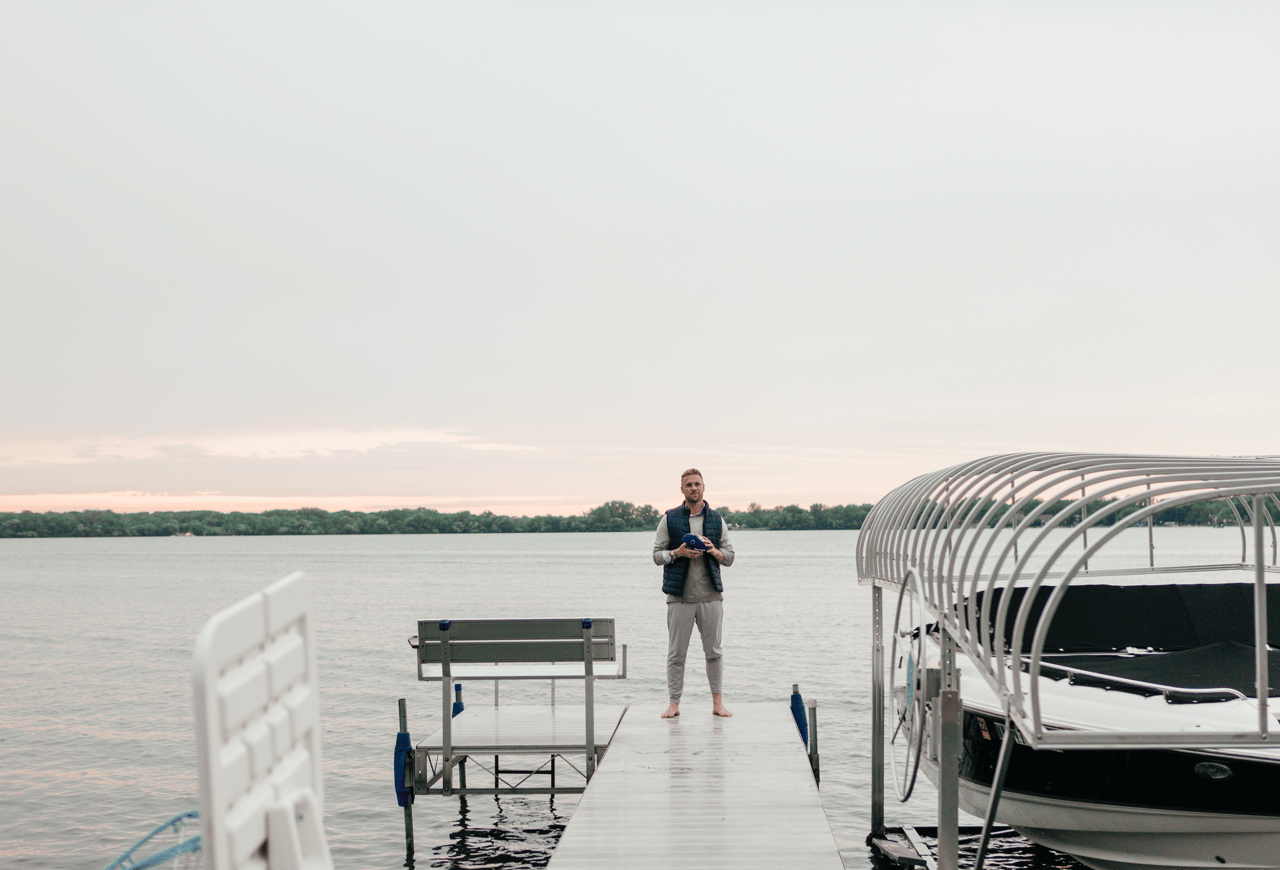
If your dock stays under 8 feet wide anywhere along its length, isn't joined to another structure to form a larger footprint, and only extends as far as needed to reach usable water depth, the DNR doesn't require a permit at all. No application, no review period. This covers the majority of docks I see go in each year on the lakes I work.
Tier two: a general permit, still no paperwork
If your dock is a bit larger, up to 120 square feet of platform not counting the walkway, or 170 square feet including it, with a walkway no wider than 5 feet, you're covered under DNR General Permit 2008-0401, provided your lake carries a General Development or Recreational Development shoreland classification. White Bear Lake and Centerville Lake both qualify. There's nothing to file. If your dock fits those numbers, you're already compliant.
Tier three: when you actually need to apply
Beyond those thresholds, a wider platform, a permanent structure, or a setup combined with a large boat lift, you move into Public Waters Work Permit territory. That's a genuine application through the DNR, and I'd rather a client start that conversation before ordering materials than after. Boathouses fall under a separate review process entirely, since the state classifies them as structures rather than docks.
What the state permit doesn't cover
The DNR sets the baseline, but it isn't the only authority involved. Cities, counties, and in some cases a lake association layer their own requirements on top of the state exemption. I've seen homeowners confirm they're clear with the state, then learn later that their city wants a separate sign-off, or that their lake association has its own design standard for the neighborhood. Stopping at the state rule is how a straightforward dock project turns into a delayed one.
When I'm advising a buyer on a lake I don't already know in detail, or working through new construction, I check both layers before anyone orders a single board. That's a small step, but it's the kind of thing that saves a client real time and money later.
What this means for you
If you're planning a standard-size dock replacement this season, you're most likely exempt or covered under the general permit, and you can move forward without waiting on the state. If you're planning something larger, start the DNR conversation now, before your contractor's schedule fills up. Either way, check with your city or county. The state rule is rarely the only rule that applies.
If you'd like me to look at your specific dock plans before you spend anything, reach out. I'm glad to walk through it with you.
Blessings.
Tim Ornell Real Estate Advisor | Ornell Group Real Broker Luxury Division (NASDAQ: REAX) 651.263.9480 | ornellgroup.com Specializing in Twin Cities, MN waterfront properties and relocations.
Sources checked for this post (for your records, not for publishing inline):
- Minnesota DNR — Do I need a permit?
- Minnesota DNR — Docks and Access in Public Waters
- Minnesota DNR — Shoreland information for property owners
Tim Ornell
Real Estate Advisor | Ornell Group
Real Broker Luxury Division (NASDAQ: REAX)
651.263.9480 | ornellgroup.com
Specializing in Twin Cities, MN waterfront properties and relocations.