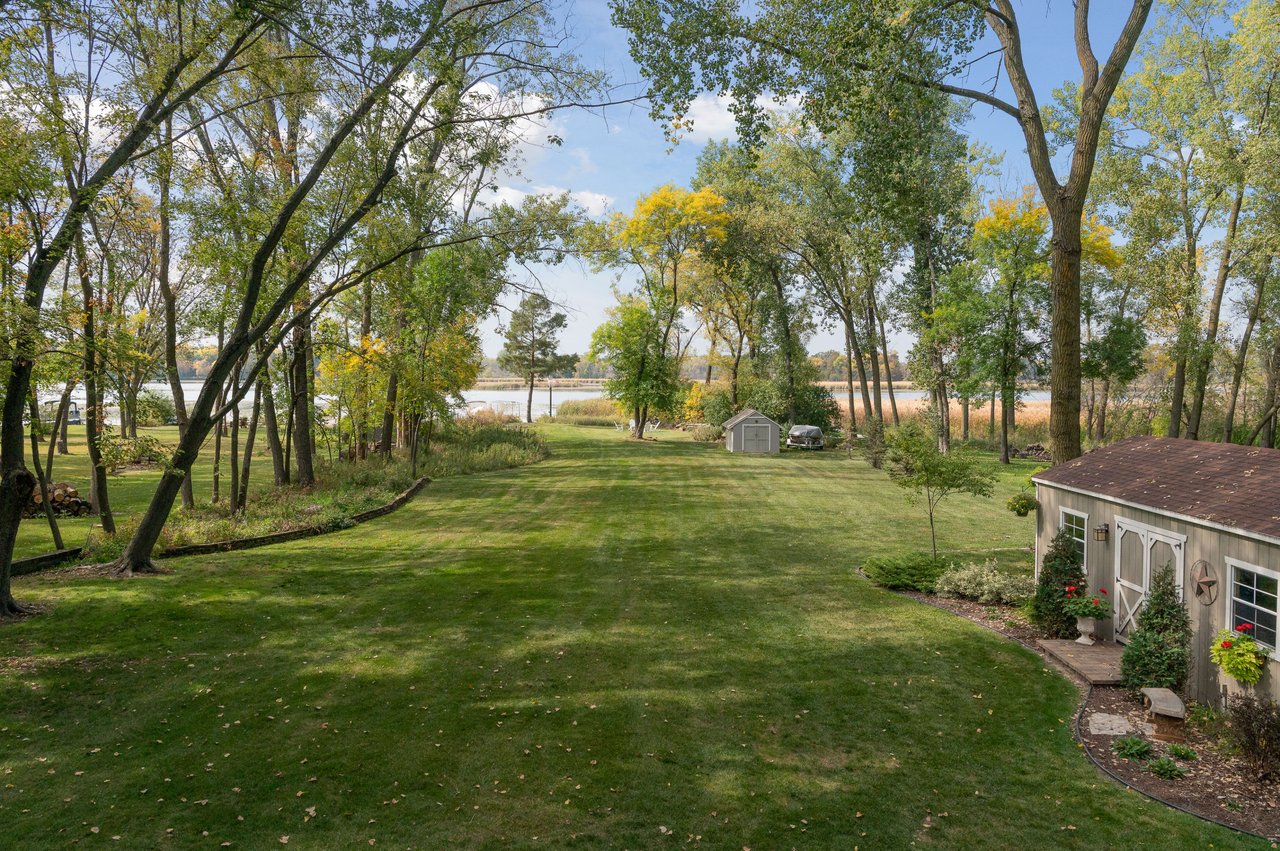
Buying waterfront property in the Twin Cities is not a casual transaction.
It is a strategic acquisition.
Whether you are purchasing for lifestyle, legacy, redevelopment, or long-term capital positioning, shoreline property behaves differently than suburban housing. Exposure, depth, dock usability, redevelopment ceilings, and micro-location within the same lake materially affect value.
This guide outlines how to approach the Twin Cities waterfront market correctly.
Is Buying Waterfront Property in the Twin Cities a Strong Long-Term Move?
Premium shoreline in Minnesota has historically demonstrated resilience because supply is fixed.
You cannot manufacture more lake frontage.
Across Lake Minnetonka, White Bear Lake, Prior Lake, Bald Eagle, Turtle Lake, Forest Lake, Owasso, and Centerville, shoreline inventory is finite. Redevelopment continues. Older cabins are replaced with architectural builds. Estate corridors mature.
Key reasons waterfront property remains desirable:
Supply Constraint: Shoreline is limited. Redevelopment compresses inventory further.
Lifestyle Utility: Boating, fishing, skiing, dining, and trail access are daily-use amenities, not theoretical ones.
Capital Stability: Premium exposure lots tend to hold value during broader market recalibration.
Legacy Appeal: Many waterfront purchases are multi-generational decisions.
Waterfront real estate is not just about square footage.
It is about position.
Understanding the Lakes: Segmentation Matters
The Twin Cities does not have one waterfront market.
It has multiple distinct ecosystems.
Lake Minnetonka
Approximately 14,500 acres with over 125 miles of shoreline. Maximum depths exceed 100 feet in certain basins.
Minnetonka operates as a network of bays: Wayzata Bay, Grays Bay, Gideon Bay, Maxwell Bay, Smithtown Bay, Halsted Bay, Lafayette Bay and more. Each behaves differently in pricing, exposure, and traffic patterns.
School district segmentation (Wayzata, Minnetonka, Orono, Westonka) further divides value.
This is the flagship luxury market.
White Bear Lake
Roughly 2,356 acres with maximum depths around 83 feet.
Prestige corridors include Manitou Island, The Peninsula, and Dellwood Road. Walkability to downtown White Bear Lake and yacht culture reinforce long-term appeal.
Clarity performance ranks in the top percentiles statewide.
White Bear blends scale with legacy positioning.
Prior Lake
Upper and Lower Prior function as one navigable system. Transactions often range from $1M to $8M depending on exposure, bluff elevation, and new construction quality.
Active sandbar culture and strong clarity metrics make this one of the top three value-driven waterfront markets in the metro.
Bald Eagle Lake
Over 1,000 acres with depths near 36 feet. Known for recreational usability and ski culture. Close to downtown White Bear Lake and located within the White Bear Lake school district.
Forest Lake
Approximately 2,270 acres and the largest lake in the north metro. Divided into three sections, with Forest Lake 1 supporting the strongest pricing tiers.
Reshanau, Turtle, Centerville, Owasso, Peltier
Smaller, more private lakes with constrained residential counts. These markets reward micro-location knowledge. Some operate with private access structures or association-based shoreline.
Each lake behaves differently.
Each requires its own strategy.
Off-Market Reality
In the upper-tier lake segment, many meaningful transactions begin privately.
Sellers test interest quietly. Buyers express intent before properties formally list. Conversations start 6–24 months before launch.
Without lake-specific relationships, key opportunities are simply invisible.
Waterfront acquisition is often about access.
Buying Considerations
Before purchasing waterfront, serious buyers evaluate:
Shoreline structure and sediment composition
Dock depth and seasonal fluctuation
Exposure (south, west, protected bay vs open water)
Bluff versus gradual entry
Wave patterns and boat traffic
Redevelopment ceiling
School district alignment
Association or private access considerations
A Minnetonka bluff estate does not behave like a flat Prior Lake lot.
A Manitou Island property does not price like a secondary White Bear corridor.
Waterfront real estate does not follow suburban price-per-square-foot logic.
It follows shoreline psychology.
Financing and Structure
Luxury waterfront buyers often approach acquisitions differently than traditional homeowners. Some purchase cash. Others leverage strategic financing. Some structure purchases for long-term estate planning.
Ownership decisions should consider tax implications, homestead positioning, and future redevelopment strategy.
Waterfront is rarely a short hold.
It is a positioning decision.
Selling in This Market
For sellers, waterfront requires disciplined positioning.
Pricing must account for exposure, micro-location, dock depth, and recent shoreline-specific comparables. One misaligned listing can anchor perception for an entire season.
Elite marketing execution is baseline:
Cinematic drone
Water-level photography
Exposure storytelling
Targeted outreach to lake-specific buyers
Controlled off-market conversations
Waterfront buyers are analytical.
They compare lakes.
They compare clarity.
They compare redevelopment potential.
Authority matters here.
Why Advisory Matters
This segment rewards specialization.
Understanding lake segmentation, redevelopment momentum, and long-term shoreline positioning requires focus. Waterfront real estate is not a side business. It is its own discipline.
The Twin Cities lake market will continue to mature. Inventory will remain constrained. Redevelopment will continue to elevate pricing tiers.
Those who approach it strategically will benefit.
Waterfront real estate in the Twin Cities operates differently than traditional suburban housing. Shoreline structure, exposure, clarity performance, redevelopment ceilings, and micro-location all influence long-term value. Strategy must reflect that.
Preparation creates leverage.
Relationships outlast transactions.
Tim Ornell
Luxury & Waterfront Real Estate Advisor
Ornell Group | Real Broker Luxury Division (NASDAQ: REAX)
651.263.8480
ornellgroup.com