By Tim Ornell | Ornell Group | Real Broker
A Personal Note Before We Begin
A few years ago, I made a decision that felt equal parts conviction and vulnerability. I went all in on waterfront real estate. Not as a side specialty — as a commitment. I moved my family to a lake. I told people that was my lane. And then I waited to see if the market, and the people in it, would trust a realtor who had chosen to live what he was selling.
That pivot was genuinely scary. I had built a career in residential sales — roughly $200 million in total volume with our group — and I was stepping into a more specific world where the margin for error felt smaller and the expectations felt higher. Waterfront buyers and sellers are not casual. They are not impulse purchasers. They have usually dreamed about the water for years before they act. They deserve someone who understands what they are walking into — not just the transaction, but the life.
To date I have closed somewhere in the range of $30 to $40 million in waterfront transactions. My average days on market for lake properties sits at 28.6 days. My list to sale price ratio is 97.2 percent. I have sold 24 lake and waterfront homes. None of those numbers happened by accident, and none of them are something I would have achieved without making the uncomfortable choice to specialize and expose myself to a market where the learning curve was real and the expectations were high.
I share that not to impress. I share it to give context to everything that follows — because what I am about to write comes from that place. From watching this market closely. From walking lake properties across the White Bear area. From sitting in living rooms with Baby Boomers who are quietly trying to figure out their next chapter. And from watching the broader housing market do something genuinely fascinating as we move through 2026 and into 2027.
Here is what I see.
The Lake Market in 2026: Still Rare, Still Coveted, But Changing
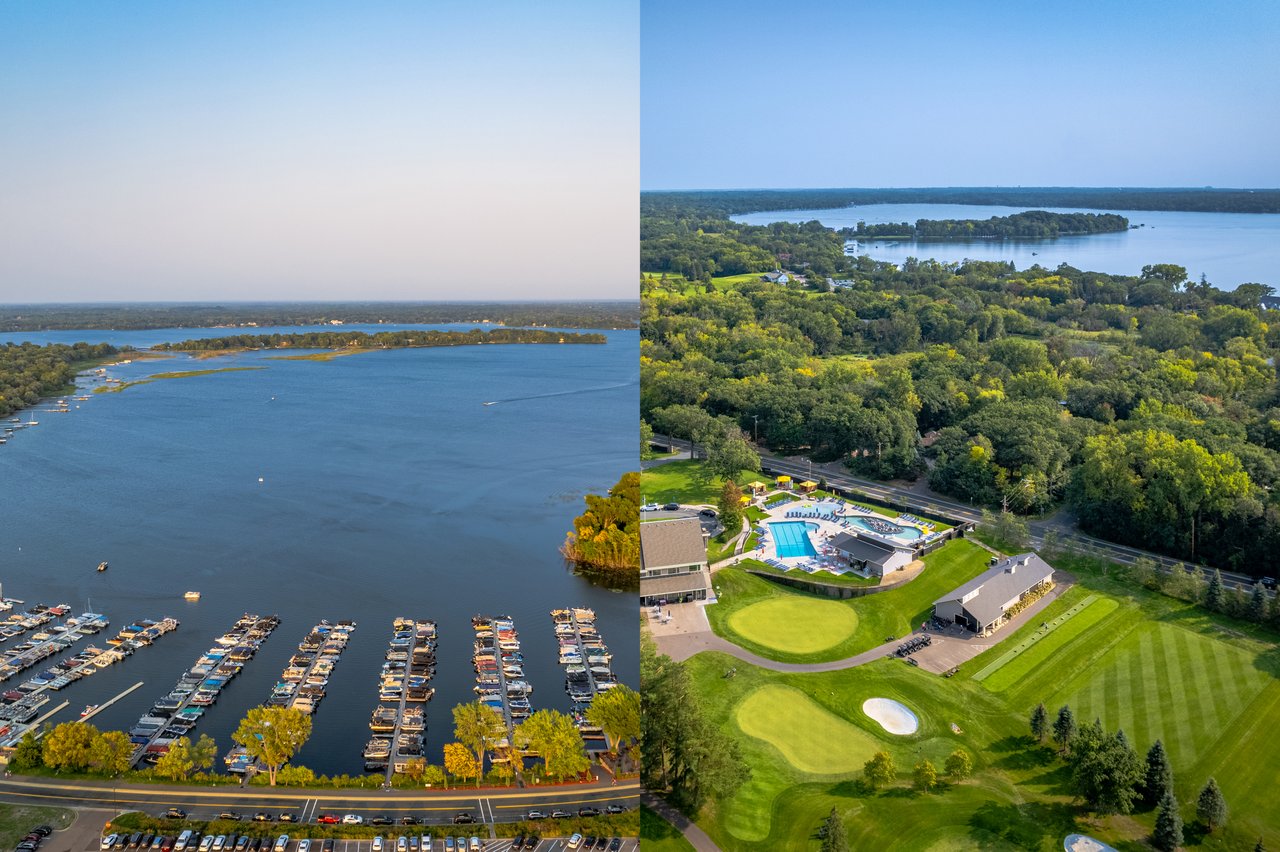
White Bear Lake has always been its own thing. Roughly 2,400 acres of open water about fifteen miles northeast of Saint Paul, drawing people to its shores for over a century. The homes on its shores range from modest mid-century cottages that have been passed through families for decades to fully renovated modern lake houses that would hold their own in any national real estate publication.
What makes the White Bear Lake market different from the broader Twin Cities residential market is scarcity. There are only so many lots with water access. There are only so many homes with true frontage. When one of those properties comes to market, it draws attention from buyers who have been watching and waiting — sometimes for years. That scarcity has always underpinned the value of waterfront real estate, and it will continue to do so.
But scarcity alone does not explain what is happening right now. And it does not explain what I believe is coming in the next eighteen to twenty-four months.
Baby Boomers: The Most Important Sellers You Are Not Talking About
If you want to understand where the lake market is heading in 2026 and 2027, you have to start with Baby Boomers. They are the generation currently sitting on some of the most desirable waterfront lots in the White Bear area — homes purchased decades ago, held through market cycles, and often deeply loved. And increasingly, they are beginning to move.
The reasons vary. Health. Family proximity. The desire to simplify. The recognition that a large home on the water requires maintenance that becomes harder to manage with age. Some want to be closer to grandchildren. Some want to travel. Some are simply ready for the next thing — a condo, a smaller home, something that does not require a snowblower and a dock.
What makes this significant is not just the volume of Baby Boomer-owned lake properties that could come to market over the next few years — it is the condition of those properties and the expectations that come with them. Many of these homes were last updated in the 1990s or early 2000s. They are structurally sound. They sit on extraordinary lots. But the kitchens have not been touched in twenty years. The bathrooms feel dated. The finishes that were aspirational in 1998 read as tired in 2026.
This creates a genuine tension in the market — and an enormous opportunity for sellers willing to address it honestly.
The Experience Economy Has Arrived at the Front Door
I want to talk about Starbucks for a moment.
Think about the Starbucks you went to ten years ago. Now think about the one you walk into today. The renovated locations feel completely different. Warm lighting, considered materials, a layout designed to make you want to stay. You are not just going for coffee. You are going for an experience. The product is the same. The experience is entirely different.
Now think about your favorite restaurant. The one you drive across town for — not just because the food is excellent, but because of how the space makes you feel. The lighting is right. The materials feel intentional. The whole environment signals that someone cared. You notice it even if you cannot name it.
This is exactly what is happening in residential real estate — and it is accelerating.
Buyers in 2026 do not separate the home from the experience of walking through it. They are not evaluating square footage on a spreadsheet. They are feeling the space. They are asking whether this house matches the life they want to live. They have been conditioned by years of renovation content, by social media feeds full of beautifully staged interiors, by coffee shops and boutique hotels and renovated restaurants that have raised the baseline expectation for what a thoughtfully designed space should feel like.
A dated kitchen does not just affect the price. It affects how buyers feel when they walk in. It changes the emotional temperature of a showing. And in a market where most buyers are making the largest purchase of their lives, emotion matters enormously.
The Most Pivotal Decision Any Seller Will Make
Here is the question I find myself asking in almost every pre-listing conversation I have with lake homeowners right now:
Is your home ready for a buyer who could also buy the renovated one down the street?
Because that buyer exists. They are active. And they have options.
This is where preparation becomes the single most important work a seller can do — and where I believe the lake market in 2026 and 2027 will divide sharply between properties that sell quickly at strong prices, and properties that sit and wonder why.
I have spent more time in the last two years preparing homes before they hit the market than in any other period of my career. Not because the market demands perfection — it does not. But because the gap between a home that is ready and one that is not has widened significantly. Buyers see everything online before they ever visit in person. The first photo determines whether they schedule a showing. The first room they walk into sets an emotional tone that is very hard to recover from if it is wrong.
Fresh paint. Professional cleaning. Updated fixtures. Thoughtful staging. These are not luxury investments — they are the price of entry into the conversation that serious buyers are having.
I have seen what a $5,000 to $15,000 investment in preparation does to a lake property's outcome. Homes that are carefully prepared sell in under two weeks at or above asking price. Comparable properties that came to market without that attention have sat for sixty, seventy, eighty days. The preparation signals to the buyer that the seller cared. That this home was loved and maintained. That signal is worth real money.
Interest Rates and the Psychology of the Lake Buyer
The interest rate environment of the last several years has done something interesting to the lake market specifically. It has created a group of buyers who are motivated but measured — people who have been waiting, who have thought carefully about what payment they can carry, and who will act decisively when a property appears that genuinely justifies the cost.
Lake buyers are not purely calculating. They are buying a lifestyle. The water, the views, the summer mornings and quiet evenings — these things carry emotional weight that does not show up cleanly in a price per square foot analysis. A buyer who has dreamed of living on White Bear Lake is not comparison shopping the way a buyer for a suburban split-level might be.
But rates have sharpened everyone's pencils. Sellers who believe their lake property can be priced above market simply because it sits on the water are finding in 2026 that the math does not always hold. Buyers are sophisticated. They have data. They know what things sold for. And while they will pay a premium for the lifestyle, they will not pay an unlimited premium for a home that has not been updated and is priced as though the lot alone is sufficient justification.
Preparation and honest pricing have never been more connected. The lot is extraordinary. The water is extraordinary. But the house has to meet the buyer where they are.
2027: The Year That Will Be Fascinating to Watch
If I had to identify the most interesting moment coming in this market, it would be 2027.
The Baby Boomer wave of lake homeowners is not a sudden event — it is a gradual shift that is beginning to accelerate. The homeowners who have been quietly contemplating their next chapter are going to start making decisions. Lots that have sat under the same ownership for twenty or thirty years are going to come available. And the question that will define those transactions is one that no amount of waterfront scarcity can answer on its own:
Are these homes ready?
Some will be. Owners who have invested continuously — who have renovated kitchens and bathrooms, maintained the property, kept pace with what buyers expect — will have extraordinary outcomes. These homes will sell fast, at strong prices, to buyers who have been waiting for exactly this opportunity.
Others will face a harder conversation. Extraordinary lots with homes that have not kept pace — structurally sound but visually dated, with finishes that belong to a different era — will need to decide whether to invest in preparation before listing, price aggressively to create a renovation opportunity, or accept that the market will tell a story about condition that the lot alone cannot overcome.
I expect both scenarios to play out simultaneously in 2027. The gap between them will be significant. And the homes that come to market prepared — thoughtfully, intentionally, with the experience economy in mind — will capture a disproportionate share of available demand.
What I Tell Every Waterfront Seller I Sit Down With
After going all in on this market, after the vulnerability of that pivot, after the transactions that confirmed the decision and the ones that tested it — here is what I have learned.
Lake buyers are buying a dream. Your job as a seller, and my job as your agent, is to present that dream in a way that is honest and compelling. The water does the heavy lifting. The lot does the heavy lifting. But the home has to say: this is what living well here actually looks like. This is the life that is available to you if you choose this place.
That cannot happen with dated countertops and carpet that has seen better days. It cannot happen with a kitchen that feels like it belongs in a different decade. It cannot happen if a buyer walks through spending their mental energy cataloging everything they would have to fix rather than imagining how they would live.
The preparation is not about deception. It is about clarity. It is about removing the friction between the buyer and the experience of seeing themselves in your home. Every dollar spent thoughtfully before a home hits the market tends to come back multiplied — not just in price, but in the speed of the sale and the quality of the offers received.
My 28.6 average days on market and 97.2 percent list to sale ratio across 24 lake and waterfront transactions did not happen because I got lucky with timing. They happened because the homes I represent come to market prepared, priced honestly, and marketed with intention. The work that happens before the listing goes live is often more important than anything that happens after.
A Final Thought on Trust and the Long Game
When I chose to specialize in waterfront real estate, the question I heard most often — sometimes out loud, sometimes in the hesitation before someone agreed to work with me — was a version of: why should I trust a realtor who just moved to a lake to sell my lake home?
It was a fair question. And I did not have a perfect answer in year one. I had conviction. I had work ethic. I had a genuine love for this specific market and a belief that going deep in one area would produce better outcomes for clients than staying broad.
Over time, the transactions did the talking. The days on market numbers spoke. The list to sale ratios spoke. The repeat clients and referrals spoke.
But I have never taken that trust for granted. Every waterfront listing I take on feels like a responsibility — to the property, to the seller, and to the buyer who is about to make a significant decision. That is the posture I try to bring to every conversation, every walk-through, every pricing discussion.
The lake market in 2026 and 2027 is going to be full of opportunity. For sellers who prepare thoughtfully. For buyers who have been patient. For agents who know the water, know the community, and know what it actually takes to bring a lake property to market in a world where the experience of everything has never mattered more.
I am looking forward to what comes next. And I am grateful every day for the privilege of doing this work on the water.
Tim Ornell is a residential and waterfront specialist with Ornell Group, Real Broker. He has closed $125 million in personal sales and is part of a group with over $200 million in total volume, including approximately $30–40 million in lake and waterfront transactions across the Twin Cities metro. Lake transaction averages: 28.6 days on market | 97.2% list to sale price ratio | 24 lake and waterfront homes sold. Reach Tim at [email protected].