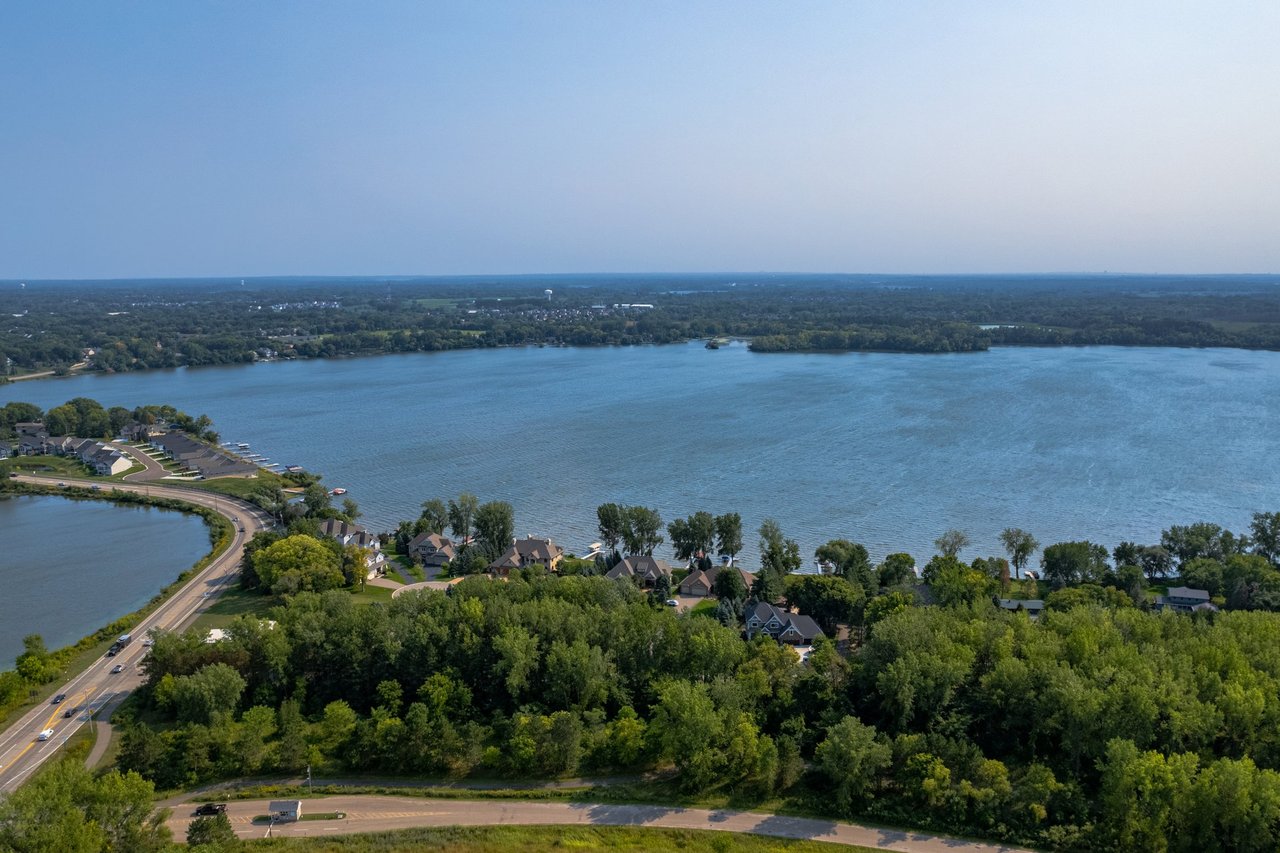
Waterfront property in the northern Twin Cities does not behave like typical suburban real estate.
It trades thinner.
It appreciates differently.
It reacts to scarcity more than macro cycles.
For clients holding substantial equity in lake property, the discussion should not start with square footage.
It should start with structure.
Scarcity Structure
Many north metro lakes have permanently constrained shoreline.
Centerville has roughly 65 residential homes with significant protected parkland buffering development.
Turtle Lake sees only a handful of transactions annually.
White Bear’s most premium stretches represent a small percentage of total frontage.
When supply is structurally limited, pricing volatility behaves differently.
That matters in long-term capital planning.
Inventory Compression
Unlike suburban developments where new supply can dilute pricing, shoreline cannot expand.
When redevelopment momentum increases — as seen recently on Bald Eagle and Centerville — ceiling bands lift incrementally.
That lift compounds over time.
Cross-Lake Comparison
Buyers with capital rarely compare one lake in isolation.
They evaluate:
White Bear vs Bald Eagle
Centerville vs Bald Eagle
Forest Lake vs Minnetonka
Prior vs Minnetonka
Understanding how your client’s property ranks within that competitive structure determines exit timing.
Liquidity Events and Timing
Waterfront transactions are thinly traded.
When liquidity events approach — business sales, retirement shifts, estate transfers — timing the listing window relative to seasonal demand can materially influence leverage.
Peak waterfront demand is not random.
Preparation ahead of the event matters more than reactive listing.
Capital Preservation vs Maximization
Some lake properties function as legacy assets.
Others are peak-cycle assets.
The discipline lies in identifying:
Is this property in a stable ceiling band?
Is redevelopment pushing the stretch upward?
Is overbuilding compressing future margin?
That clarity informs whether holding or exiting aligns with the client’s broader financial structure.
Waterfront is not a volume asset class.
It is a scarcity-driven micro-market within a defined geographic corridor.
For advisors working with families who hold meaningful equity in lake property, lake-specific positioning analysis can materially affect outcomes.
It is not about selling.
It is about understanding how this asset class behaves relative to the client’s total portfolio.
Preparation creates leverage.
Relationships outlast transactions.
Tim Ornell
Luxury & Waterfront Real Estate Advisor
Ornell Group | Real Broker Luxury Division
NASDAQ: REAX
651.263.8480
ornellgroup.com