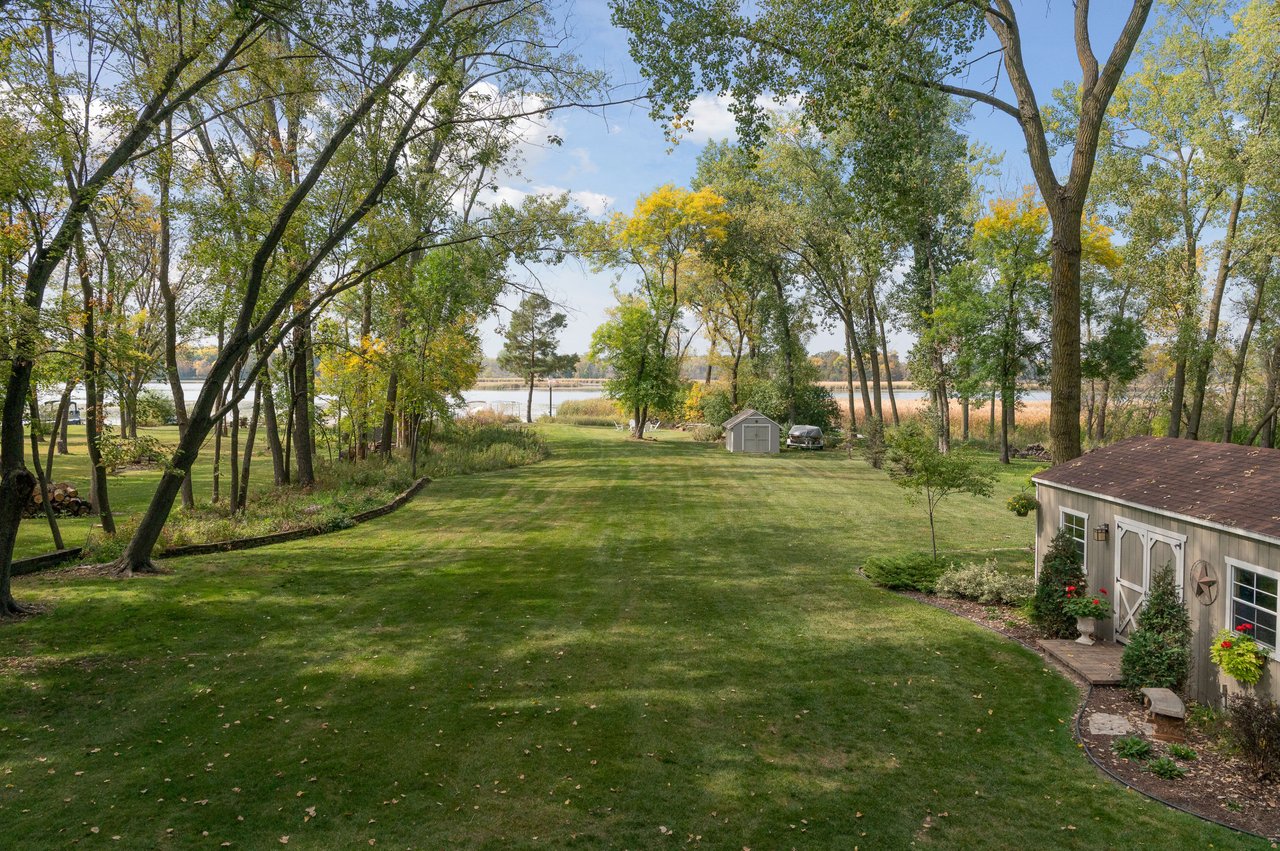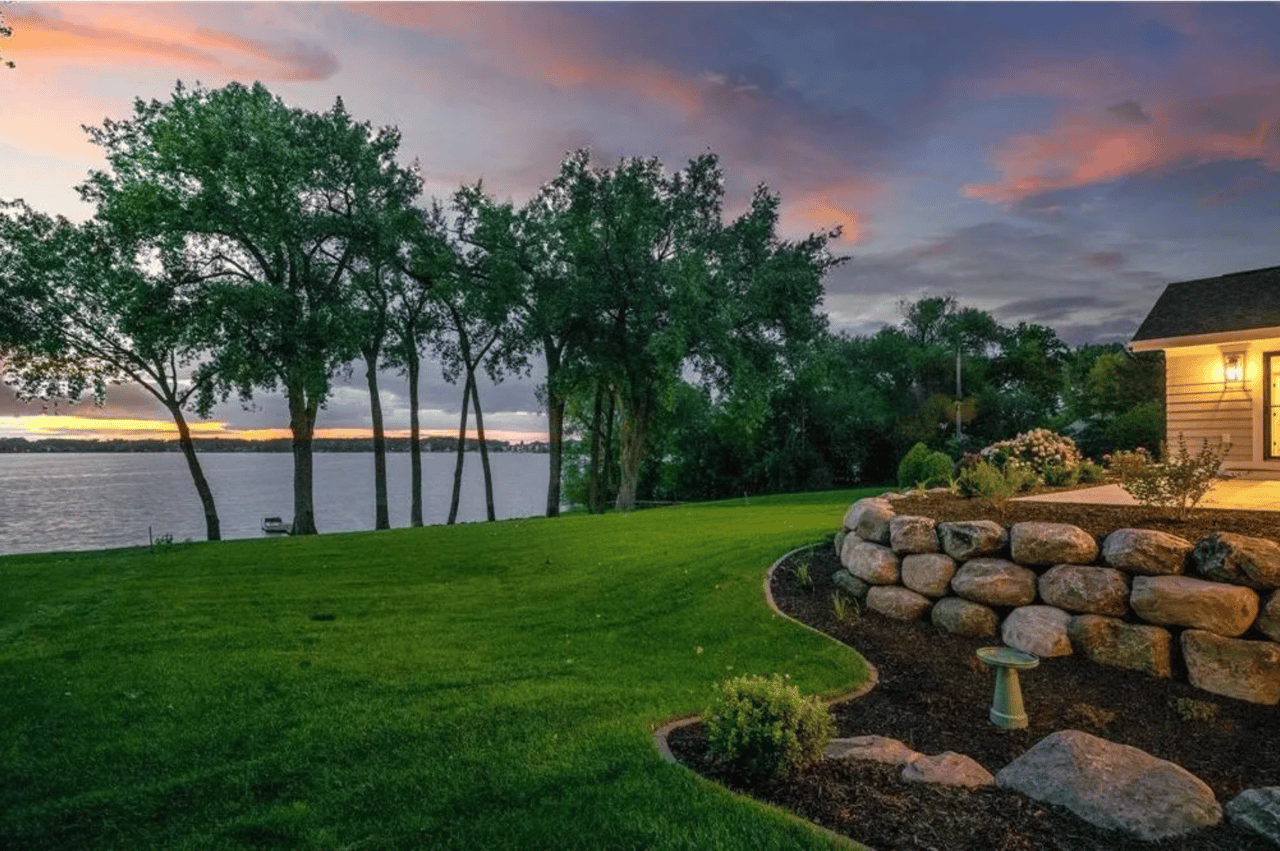
Short answer: Usually yes, but the new home has to meet today's shoreland rules, and those are often stricter than when the old house went up. The biggest one is the setback from the lake. Under Minnesota's statewide minimums, that's 75 feet on a sewered Recreational Development lake and 50 feet on a sewered General Development lake, and cities can be stricter. Get a survey and talk to the city before you buy a teardown.
A lot of the older homes on north metro lakes sit closer to the water than anything you could build new. That's fine while they stand. It matters the day you knock one down.
The setback is the big one
Minnesota's shoreland rules set minimum distances from the ordinary high water level (OHWL):
Lake class | Sewered | Unsewered |
|---|---|---|
General Development | 50 ft | 75 ft |
Recreational Development | 75 ft | 100 ft |
Natural Environment | 150 ft | 150 ft |
Those are state minimums. Your city's ordinance is what actually applies, and it can ask for more.
Setback averaging can help
If there are homes on the lots on both sides, state rules let the new home line up with the neighbors' setbacks without a variance, as long as it's not in the shore impact zone or a bluff impact zone. On an older lake street, that can make a real difference.
Nonconforming homes
An older home that sits inside today's setback is usually "nonconforming." It can stay, but local rules commonly say any addition or expansion has to meet current setbacks. Full rebuilds of nonconforming homes follow city rules, and they vary.
What I'd check before buying a teardown
- A survey that shows the OHWL. Every setback is measured from it.
- The lake's classification. General Development, Recreational Development, or Natural Environment.
- The city's shoreland ordinance. Setbacks, height, and how much of the lot can be hard surface.
- Sewer or septic. It changes the setback and adds its own rules.
- A builder walk-through. Grade, elevation, and access drive the real cost on lake lots.
Quick FAQ
What is the OHWL? The ordinary high water level. It's the line all lake setbacks are measured from.
Can I build closer if my neighbors are closer? Often, through setback averaging, if the site isn't in a shore or bluff impact zone. Your city confirms.
Do I need a variance to rebuild in the same spot? If the old footprint is inside today's setback, likely yes, or you move the house back. Ask the city early.
Looking at a lake home you'd tear down or a lake lot to build on? Send me the address and I'll help you figure out what can actually go there.
Tim Ornell | Realtor, Real Broker Luxury Division (NASDAQ: REAX) | 651.263.9480 | ornellgroup.com
Sources: MN Rules 6120.3300: Shoreland zoning provisions · Mahtomedi Shoreland Overlay District (example local ordinance) · Columbus, MN Shoreland Ordinance (example)